Our Products
About Laser Products;
The most significant difference between fiber optic, CO2, and UV laser encoders is the wavelength of the light they produce. Shorter wavelengths typically have more energy and higher absorption than longer wavelengths. Therefore, a laser's wavelength affects its ability to mark specific materials.
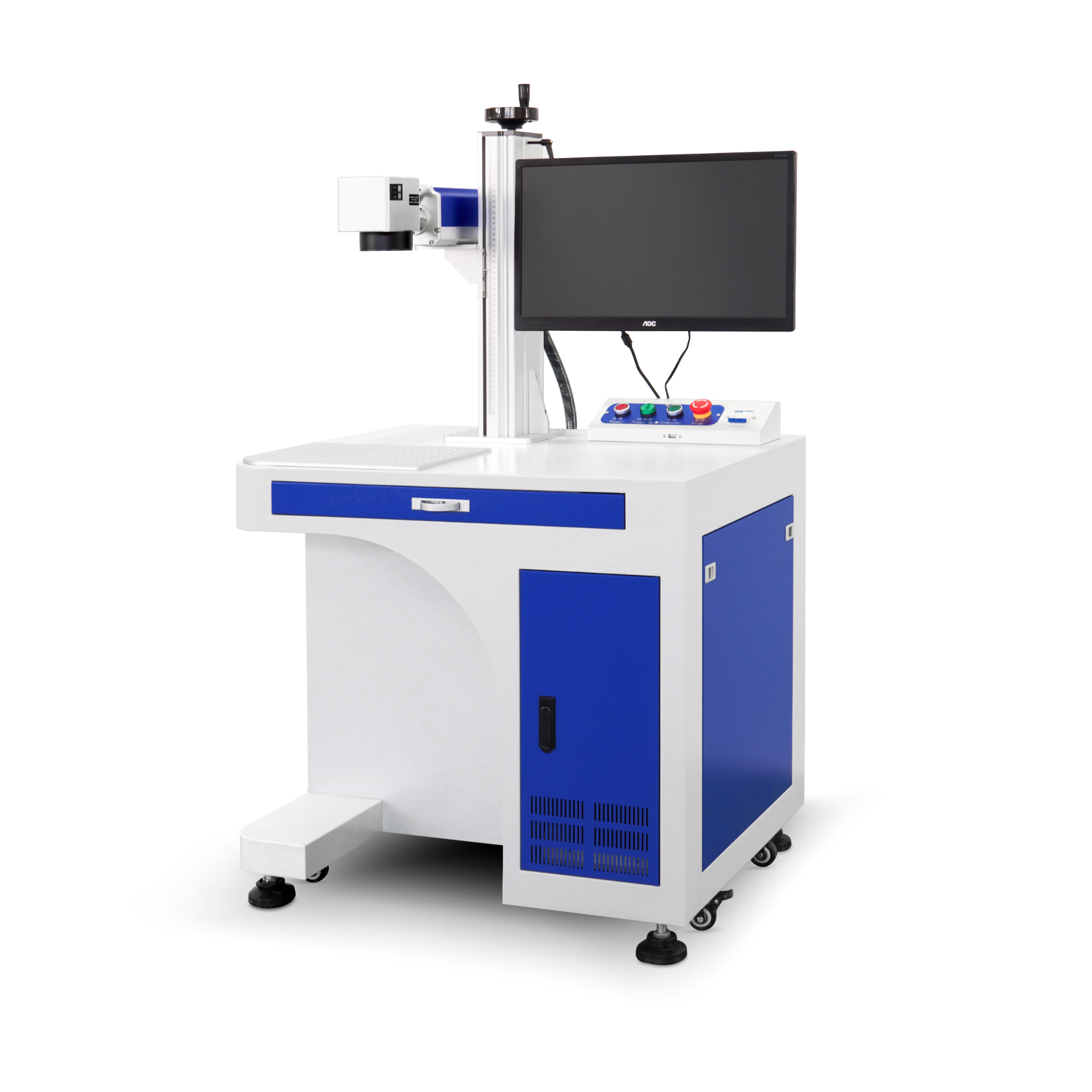
FIBER Laser Devices
Fiber lasers have a wavelength of 1064nm and are therefore infrared (IR) lasers.
Fiber lasers can mark a wide variety of materials and are particularly suitable for marking items made of metal.
The high power of a fiber laser makes it ideal for annealing and etching applications, but marking transparent objects is not possible because the IR light passes through the object.

CO2 Laser Devices
CO2 lasers have a wavelength 10 times longer than standard wavelength systems. They are good at marking paper, resin, wood, rubber, and transparent materials such as glass and PET. However, it is not possible to mark metal with a CO2 laser encoder because the laser light is not absorbed by the object.
10.6 microns: Very suitable for most standard consumer packaging product applications such as paper, wood, bamboo, etc.
10.2 microns: Best suited for laminating cartons, commonly used in many cosmetic and pharmaceutical applications.
9.3 microns: Particularly suitable for marking on PET plastics (typically beverage products)

UV Laser Devices
UV lasers use a highly absorbable wavelength (355nm) to mark parts.
This high absorption allows UV lasers to perform 'cold marking' (i.e., marking without additional thermal stress).
Therefore, UV lasers are ideal for applications requiring high contrast or minimal product damage.

Our Other Laser Devices